
Most telehealth SMS and email marketing setups didn't begin as one strategy. Email came first. SMS was bolted on later, usually because someone saw strong response rates and wanted a faster channel.
A few months on, the result is often two programs running side by side: built by different people, triggered by different rules, and blind to each other.
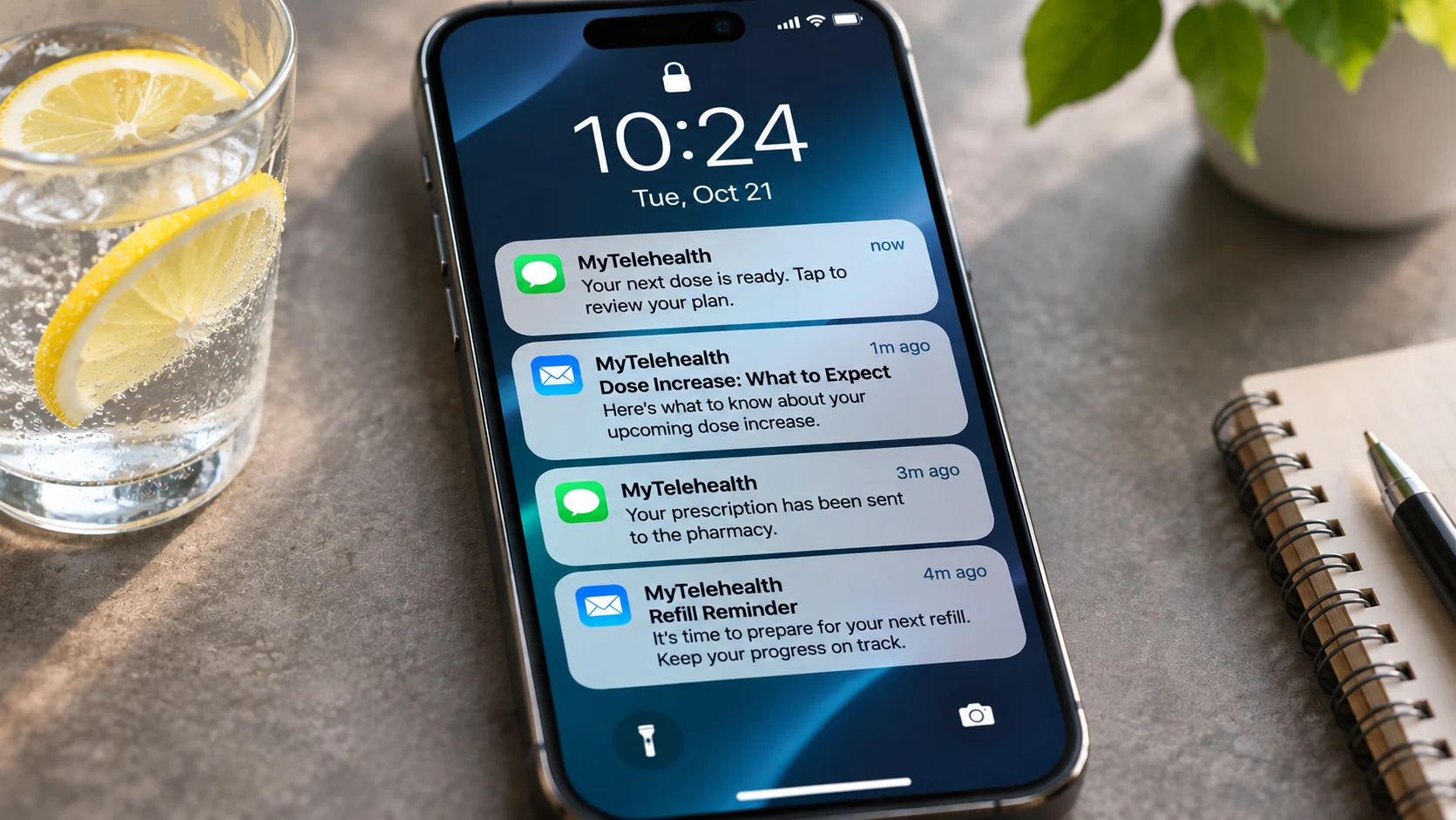
The patient sees all of it. A refill reminder by email at 9:00, the same reminder by text at 9:05, a promotional SMS that afternoon, and a check-in email that evening.
None of it feels like care.
When two channels don't know about each other
Disconnected channels create predictable problems. Patients get duplicate messages about the same event. Urgent notes get buried among promotional ones. Opt-outs climb, and a patient who unsubscribes from texts out of frustration may take your most reliable support channel with them.
There's a trust cost, too. Telehealth patients have already handed over sensitive health information. When messaging feels uncoordinated, it hints that the rest of the operation might be as well.
The usual fix is to cut frequency across the board. That treats the symptom. The real issue is that nobody is deciding which channel should carry which message, and that decision belongs at the strategy level, not in two separate send calendars.
How orchestrated telehealth SMS and email marketing divides the work
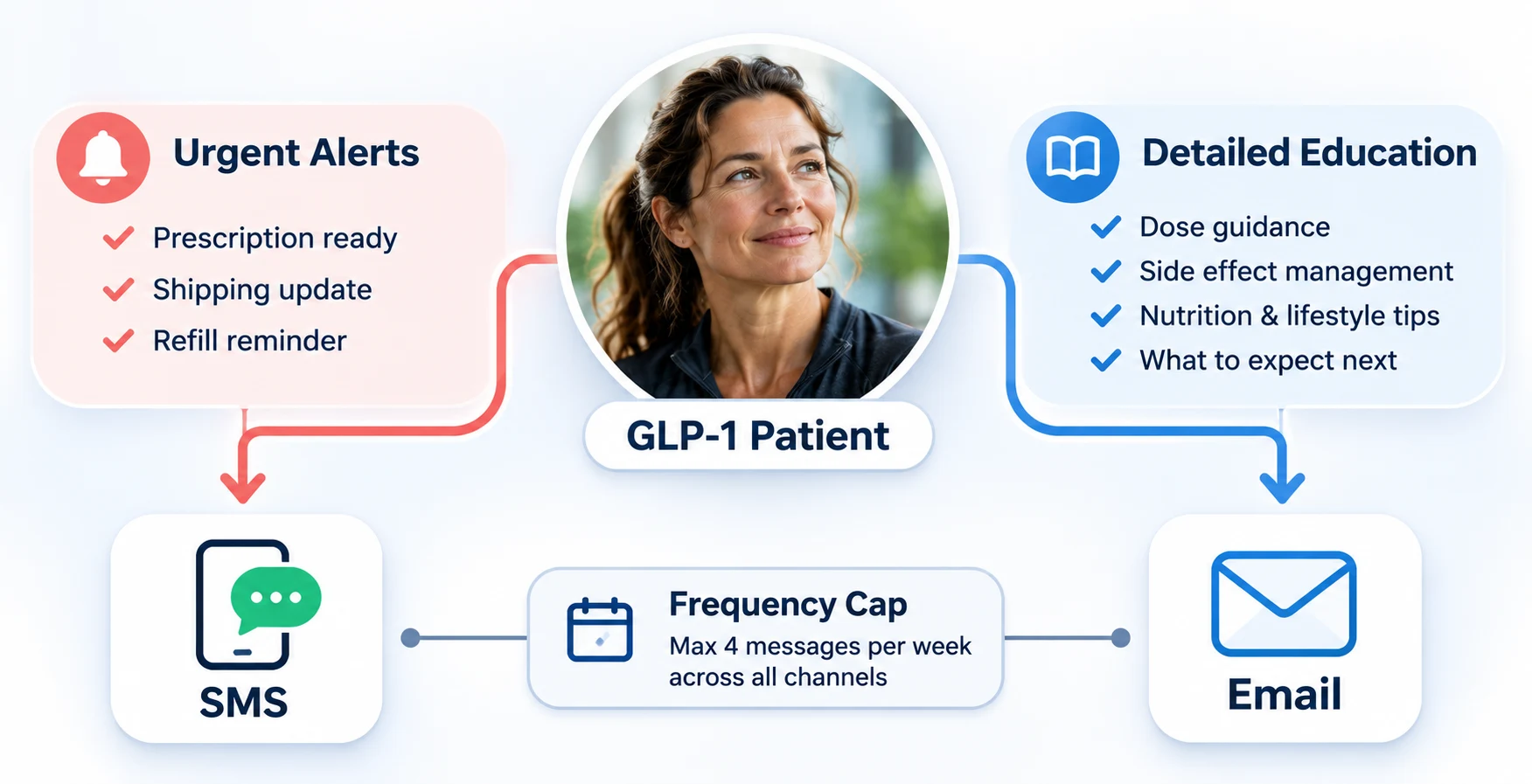
Orchestration starts from a simple premise. Every message has an urgency and a weight, and each channel suits a different combination of the two.
SMS is immediate and personal. It earns its place in time-sensitive, low-detail moments: a shipment out for delivery, a payment that needs attention, a refill window about to close, an overdue check-in. Used that way, SMS marketing reads as service rather than noise.
Email has room. It carries the context a text can't, like what to expect at a new dose, how the refill process works, progress milestones, and education a patient may want to save and revisit.
In an orchestrated program, the channels hand off instead of overlapping. A text flags that something needs attention; the email explains it. If a patient engages on one channel, the other stands down. Frequency limits apply to the patient as a whole, not to each channel separately, so total contact stays reasonable no matter how many flows are running.
Designing that logic across every stage of treatment is strategic work, and it rarely happens by accident.
The consent and stack questions worth asking
For telehealth SMS and email marketing, orchestration lives or dies on infrastructure, and on rules that are easy to get wrong.
Consent comes first. SMS marketing carries its own consent requirements under the TCPA, separate from email, and carrier registration rules govern how business texts are sent. A patient who agreed to transactional texts hasn't necessarily agreed to promotional ones. Those distinctions have to live in the data, not in someone's memory.
HIPAA adds another layer. Texts are short, show up on lock screens, and are easy for someone else to glance at, which limits what can safely appear in them. We cover the email side of those limits in HIPAA-compliant email automation.
Then there's the stack. Many teams run email in one platform and SMS in another, which is exactly how two programs drift apart. Platforms that manage both channels from a shared customer profile make orchestration far more practical; we've written about why Customer.io for telehealth is one of them.
None of these choices is purely technical. Each one shapes what patients receive, and getting them right up front costs far less than unwinding them after an opt-out spike or a compliance review.
More channels should mean better care, not more noise
Adding SMS was the right instinct. Patients respond to it, and the right text at the right moment can keep someone on track.
The value of telehealth SMS and email marketing comes from coordination, not volume: one patient profile, one set of frequency rules, one view of consent, and a clear role for each channel at every stage of treatment. That coordination is a core piece of the retention lifecycle laid out in GLP-1 patient retention.
If your email and SMS programs feel like they were built by two different teams, it may be worth a conversation. Wired Messenger's help telehealth operators bring both channels into a single, compliant program.