
Compliance is one of those areas where telehealth operators tend to assume they're covered until something surfaces that suggests otherwise. The BAA is signed, the platform is credentialed, and the legal team signed off on the privacy policy. But when it comes to email automation and SMS marketing specifically, the compliance picture is almost always more complicated than operators initially expect.
HIPAA-compliant email automation isn't just about which platform you use. It's about how that platform is configured, what data flows through it, how your sequences are written, and whether the operational decisions made at the marketing level align with what your compliance infrastructure was actually designed to protect. Most of the gaps Wired Messenger encounters when working with telehealth operators aren't the result of negligence. They're the result of marketing teams and compliance functions operating with incomplete visibility into each other's work.
The Compliance Assumptions That Create the Most Exposure
The single most common misconception in this space is that platform selection solves the compliance problem. An operator signs a BAA with their ESP, confirms the platform is HIPAA-eligible, and proceeds as though the compliance box has been checked. What that BAA actually does is establish shared responsibility. It does not make every configuration decision, every automated sequence, and every data integration automatically compliant.
The distinction matters because the risk doesn't live in the platform. It lives in how the platform is used.
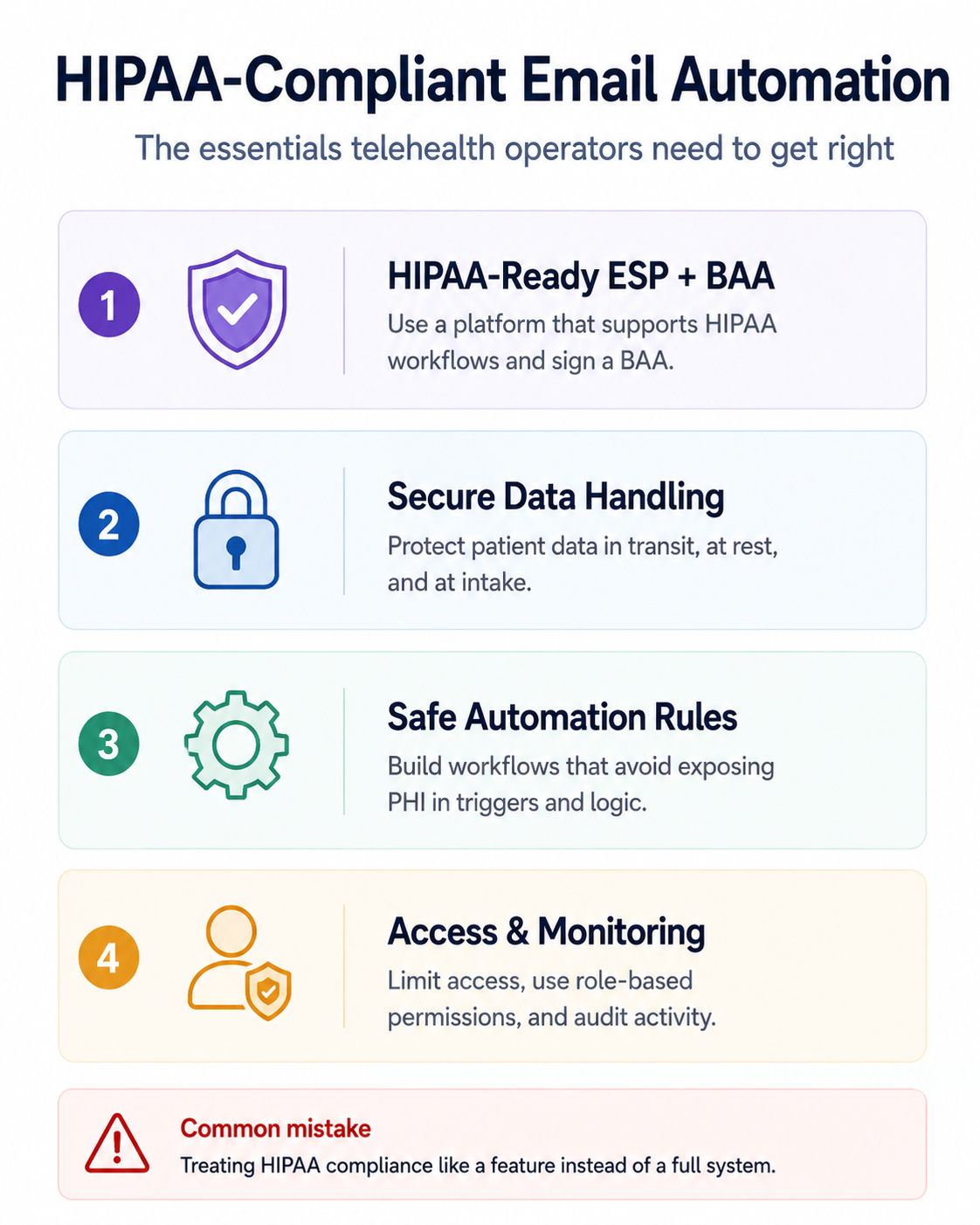
Consider how patient data moves through a typical email automation setup. Intake forms feed into segmentation logic. Behavioural triggers pull from clinical or subscription data. Personalization tokens reference treatment status, appointment history, or prescription details. Each of these data flows represents a point where protected health information can enter the email environment in ways that may not have been fully reviewed against HIPAA's minimum necessary standard.
That standard matters more in automated programs than in manually sent communications, because automation scales. A single misconfigured trigger or a personalization field that pulls more patient data than necessary doesn't create one exposure. It creates the same exposure across every send, compounding quietly until someone looks closely enough to notice.
Where Email Automation Specifically Gets Complicated
HIPAA's application to email marketing isn't always straightforward, and the areas of genuine ambiguity are worth understanding clearly.
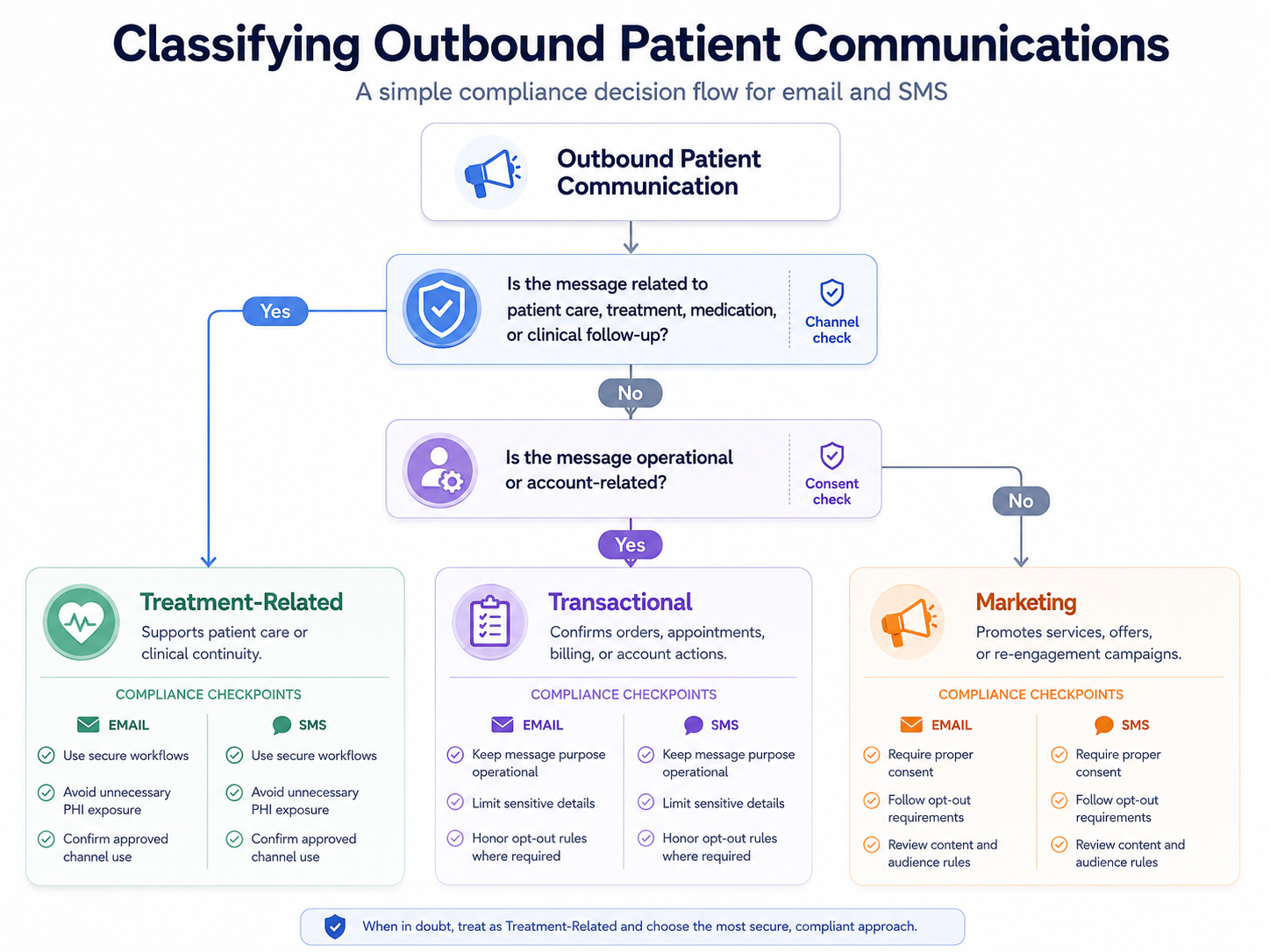
The marketing versus treatment communication distinction. HIPAA draws a meaningful line between communications that constitute treatment-related outreach and those that qualify as marketing. A refill reminder tied to a patient's active prescription sits in a different regulatory territory than a promotional email about a new service offering. Automated sequences that blend these categories without clear segmentation logic can create compliance exposure that neither the marketing team nor the legal team fully owns.
Transactional vs. promotional classification in SMS. SMS marketing for telehealth carries its own compliance layer that sits on top of HIPAA, specifically the Telephone Consumer Protection Act. The classification of a message as transactional versus promotional determines what consent requirements apply. Automated SMS sequences that were set up without explicit attention to this distinction are a common source of compliance gaps, particularly as programs scale and message types proliferate.
Personalization depth and minimum necessary standards. The more sophisticated an email automation program becomes, the more patient data it tends to reference. Dynamic content blocks, behavioural triggers, and treatment-stage segmentation all require data inputs. The compliance question isn't whether this personalization is valuable. It is. The question is whether the data being used to power it is limited to what's actually necessary for the communication's stated purpose.
Unsubscribe and suppression logic in a healthcare context. Standard email unsubscribe handling gets more nuanced when some communications may qualify as treatment-related rather than marketing. A patient who unsubscribes from promotional emails may still be eligible to receive certain appointment or prescription-related communications. Automation that doesn't account for this distinction can either suppress messages that should still be sent or continue sending messages that should have stopped.
The SMS Layer Most Operators Underestimate
Email tends to get more compliance attention than SMS in the telehealth space, partly because email programs are more mature and partly because the HIPAA implications feel more intuitive. But SMS marketing for telehealth operators carries a meaningful risk that often goes underexamined.
Beyond TCPA consent requirements, SMS introduces a channel where message brevity can create its own compliance tension. A short message that references a patient's treatment or prescription status in a way that could identify them as a patient, sent to a phone number that may be accessed by others, touches HIPAA in ways that aren't always top of mind when a sequence is being built.
The operators who have thought carefully about this tend to draw clear distinctions between what their SMS program communicates versus what their email program communicates, and they've built consent capture and suppression logic that reflects those distinctions. The ones who haven't tend to find out why it matters at an inconvenient time.
What Thoughtful Compliance Infrastructure Actually Looks Like
Getting HIPAA-compliant email automation right is not primarily a legal exercise. It's an operational one. The legal framework tells you what the rules are. The operational work is what ensures those rules are actually reflected in how your automation is configured, how your data flows are structured, and how your content is reviewed before it scales.
That means having a clear taxonomy of your communication types before you build sequences, not after. It means data minimization is a design principle in your segmentation logic, not an afterthought. It means your suppression and consent management architecture accounts for the different consent requirements across email and SMS, and across marketing and treatment communications.
It also means the team building and managing your automation understands the compliance implications of the decisions they're making at the configuration level. This is especially true for operators whose email programs connect to clinical systems. The data flows between an EHR and a marketing automation platform introduce their own compliance considerations that require deliberate architecture — something covered in depth in EHR Integration and Lifecycle Automation. This is where the intersection of technical email marketing expertise and healthcare-adjacent compliance awareness becomes genuinely important, and genuinely rare.
For operators building this infrastructure as part of a broader email lifecycle marketing strategy for telehealth, compliance architecture isn't a separate workstream. It's foundational to every sequence, every trigger, and every data integration in the program. And for operators working through Customer.io for telehealth, understanding how HIPAA compliance maps to platform configuration decisions is part of what separates a setup that holds up from one that creates exposure as it scales.
Compliance Is a Foundation, Not a Feature
The telehealth operators who handle this well don't treat compliance as a constraint on their marketing program. They treat it as a design principle. The result is an email and SMS program that can grow, that can get more sophisticated, and that doesn't require a legal review every time a new sequence gets built, because the foundational decisions were made correctly at the start.
Wired Messenger works with telehealth operators to build email and SMS automation programs that are both high-performing and compliance-aware from the ground up. If there's uncertainty about where your current program stands on the compliance questions that matter most, that's a conversation worth having before the program scales further.