
For most telehealth programs, the GLP-1 onboarding email sequence is two messages long: a welcome email and a shipping notice. Everything between them is silence.
That silence is expensive.
The stretch between consult, prescription, and first dose is when a new patient decides, usually without realizing it, whether your program feels organized, trustworthy, and worth the monthly charge. We've written about why GLP-1 patients drop off in the first 90 days. A surprising share of that drop-off traces back to the first two weeks, long before anyone on the team sees a cancellation.
The two weeks nobody is watching
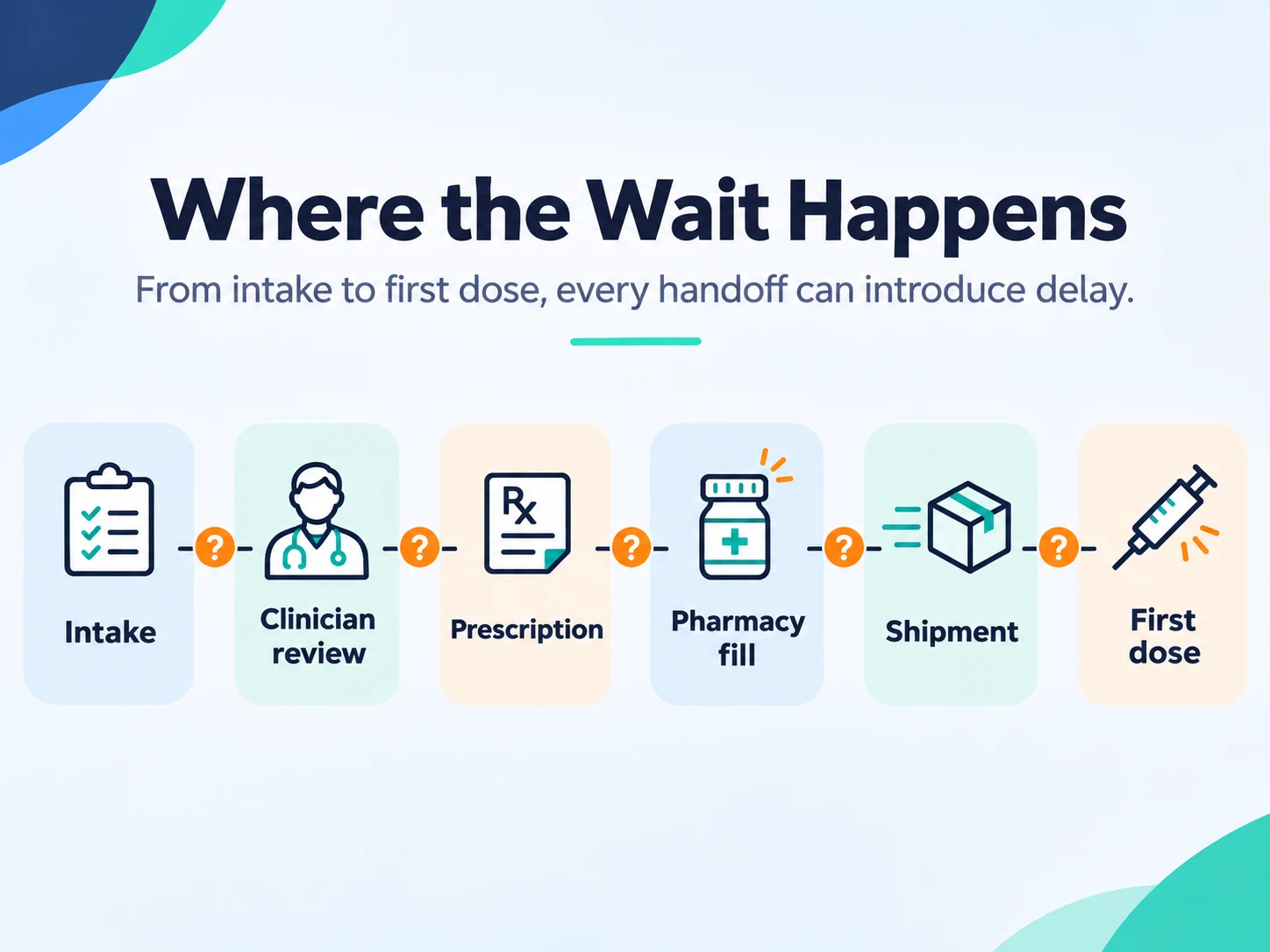
A new patient's first 14 days run through a chain of handoffs the operator only partly controls. Intake gets submitted. A clinician reviews it. A prescription is written, sent to the pharmacy, filled, and shipped, with a payment processing somewhere along the way.
Each handoff adds a delay, and each delay plants a question. Was I approved? Did my card go through? Why hasn't anything shipped yet?
A patient who has to contact support to find out what's happening has already lost a little confidence. One who hears nothing at all starts to wonder whether signing up was a mistake.
This is also peak buyer's-remorse territory. The patient has paid, often a meaningful amount, and has nothing in hand. At that point the GLP-1 onboarding email sequence is the only thing standing between uncertainty and a refund request. Closing that gap takes visibility into systems most email programs never touch.
What a GLP-1 onboarding email sequence actually has to accomplish
A strong sequence isn't judged by how many emails it contains. It's judged by whether the patient reaches their first dose informed, confident, and expecting to stay. That comes down to a handful of jobs.
Make progress visible
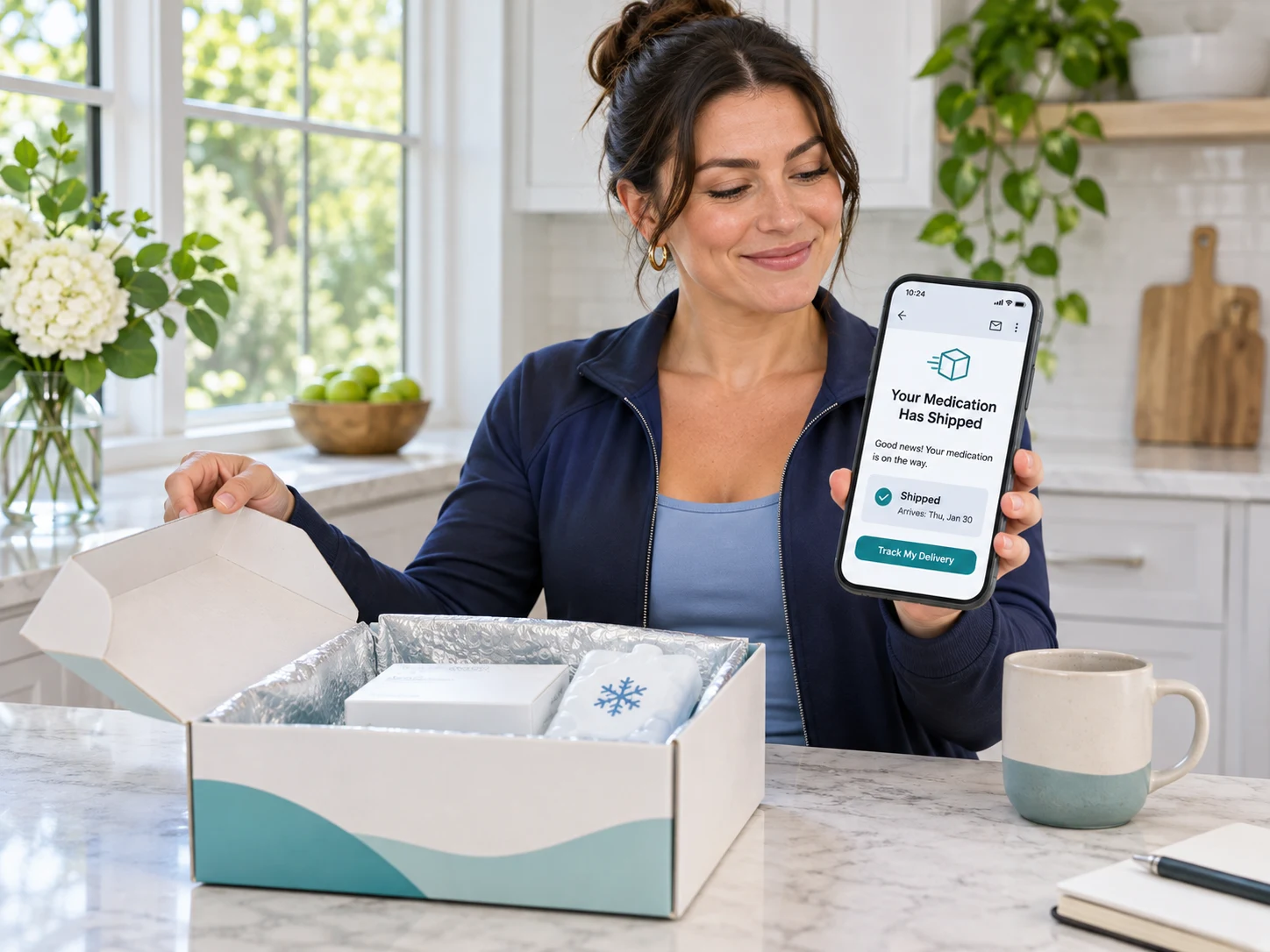
Every status change a patient cares about, from approval to delivery, should reach them before they think to ask. Status updates sound mundane. To someone waiting on a medication they've researched for months, they're proof the program is real and moving.
Set expectations before the first dose
Patients who know what the early weeks may feel like handle them better. Onboarding is the moment to frame common side effects, the dose escalation schedule, and the reality that results take time, in language your clinical team has approved. Patients who start treatment expecting overnight change tend to be the first to quit.
Show where help lives
No new patient should have to wonder how to reach a clinician, what happens if a shipment is late, or where to manage their subscription. Clear paths to support lower anxiety and head off avoidable cancellations.
Sound like a care team, not a storefront
Promotional language in the first two weeks chips away at the clinical trust a patient just extended. The best onboarding reads like it came from people who are paying attention.
Onboarding is only the first of several high-risk stretches in treatment; we cover the others in the retention moments most GLP-1 programs miss. Getting each job right, in the right order and at the right moment, is less a writing exercise than an orchestration problem.
Why the timing has to come from your data
Almost none of those messages work on a fixed schedule.
A day-three email that assumes the medication has shipped will be wrong for every patient whose prescription is still in review. A day-seven "how's your first week going?" lands awkwardly for someone still waiting on a box.
A GLP-1 onboarding email sequence only holds together when it's driven by events. That depends on email integration with the systems that actually know where each patient stands: the EHR, the pharmacy partner, billing, and the intake platform. Once that data reaches your ESP, email automations can respond to it, sending the shipping update when the order ships, pausing the welcome flow when a payment fails, and flagging a patient for the care team when they go quiet after delivery.
All of it has to stay within HIPAA's limits, which shapes what a subject line can say and what data can move between systems at all.
This is where many onboarding programs stall. The copy exists, but the connections underneath it don't, so the sequence falls back on a calendar and drifts out of step with the patient. Building that layer correctly is specialized work, and it's the difference between onboarding that feels attentive and onboarding that feels like a mail merge.
The first impression is the retention strategy
By the time a patient takes their first dose, they've already formed an opinion about your program. A well-built GLP-1 onboarding email sequence makes sure that opinion is confidence rather than doubt.
It's the opening stage of the broader lifecycle we laid out in GLP-1 patient retention, and the one that shapes every stage after it.
If your onboarding still amounts to a welcome email and a tracking number, it may be worth a closer look. Wired Messenger's email automation and integration services are built to close exactly this gap, so the first two weeks work as hard for retention as every month that follows.