
1. From Analytics to Activation
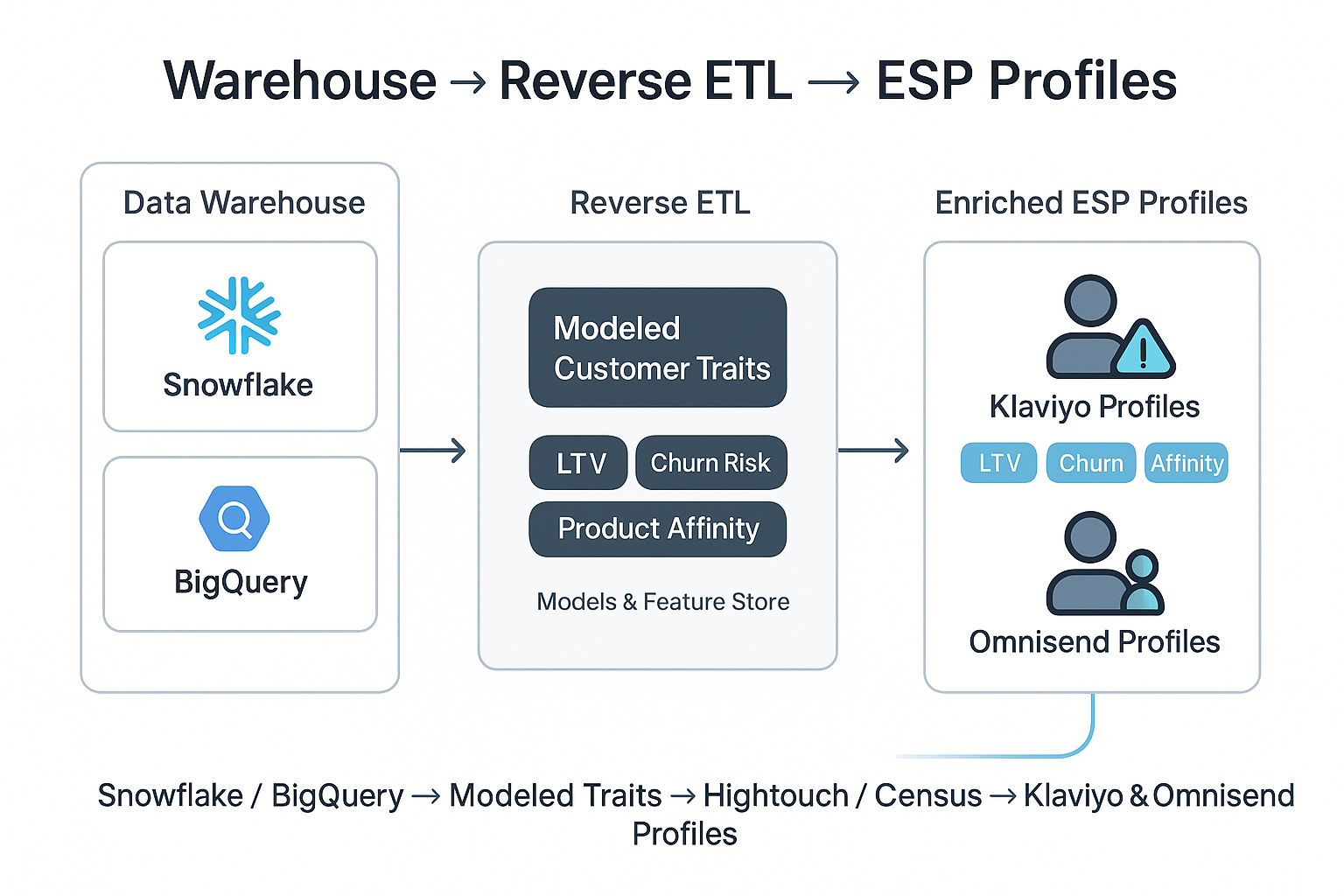
Reverse ETL takes modeled data from your warehouse and pushes it into tools your marketing team actually uses—like Klaviyo, Omnisend, or Customer.io.
That means all the behavioral insights, product predictions, and LTV scores your data team’s been sitting on? They can finally shape real-time segmentation, dynamic content, and campaign targeting—without building a custom pipeline from scratch.
And you don’t need a 6-month roadmap to get started.
With tools like Hightouch, Census, RudderStack, and Polytomic, you can ship impactful use cases in under 30 days.
Learn how reverse ETL Klaviyo connects modeled insights to real-world campaigns.
2. Why Klaviyo & Omnisend Are Built for This
Modern ESPs aren't just email delivery platforms—they're data-rich environments that support:
- Profiles with custom properties
- Event tracking and aggregation
- Trigger-based automation
That’s fertile ground for marketing data activation.
Klaviyo
- Profiles API: Push attributes like predicted LTV, churn score, or next best SKU
- Custom Metrics: Great for tracking model outputs or post-purchase signals
Omnisend
- Contact Properties: Ideal for behavioral scoring, subscription status
- Events API: For syncing actions like in-store purchases or Gorgias ticket outcomes
Reverse ETL Tool and Example ESP Integration
Hightouch: Klaviyo and HubSpot
Census: Omnisend and Iterable
RudderStack: Customer.io and Braze
3. Use Case #1: VIP / LTV Cohort Sync
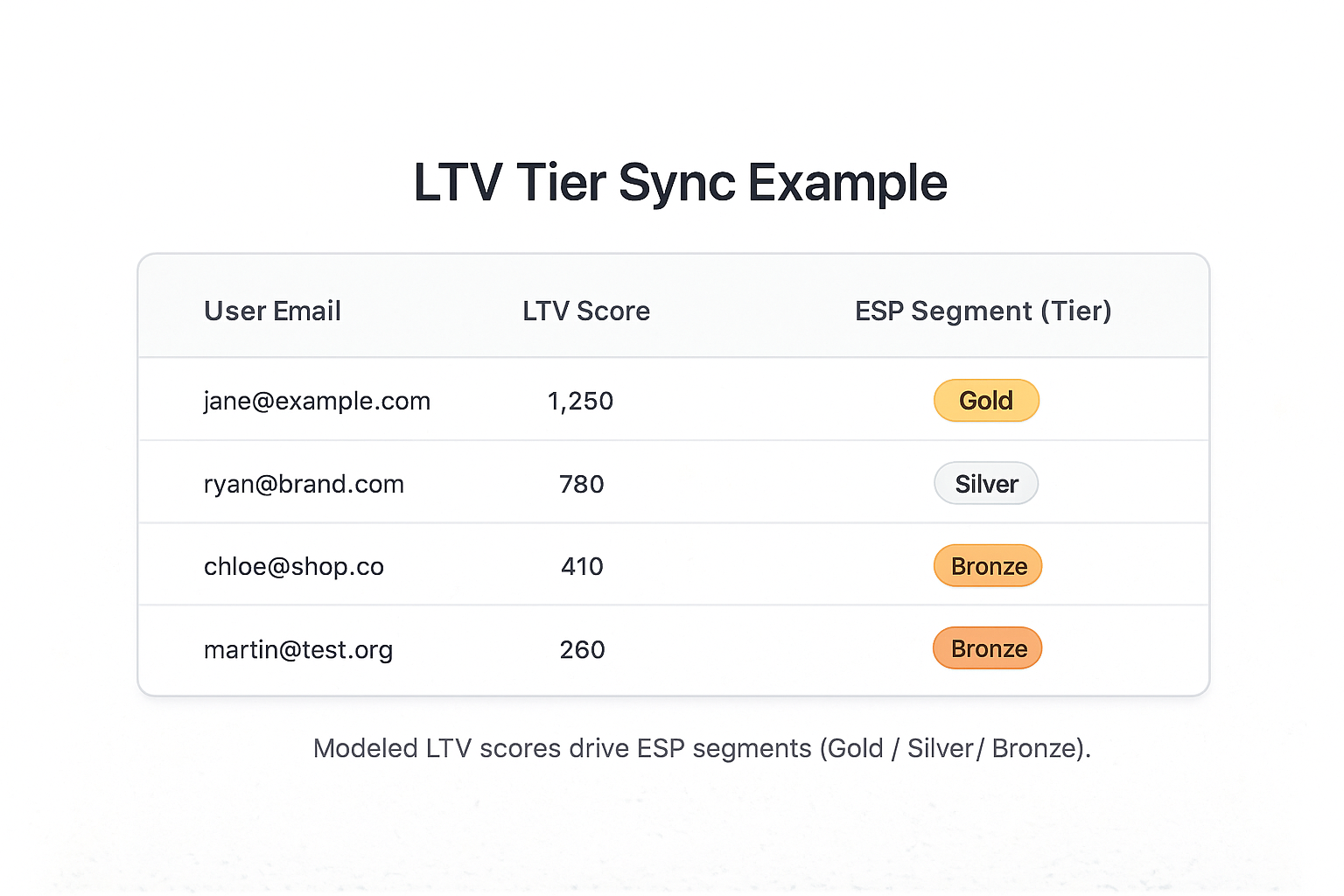
The play: Tag your high-value users based on predicted LTV or purchase behavior.
- Warehouse logic: LTV model in BigQuery
- Reverse ETL: Hightouch to Klaviyo VIP tag
- Campaign: Priority access to new drops, loyalty offers
- Impact: Higher clickthroughs, increased AOV, better margin segmentation
4. Use Case #2: Churn-Risk Suppression
The play: Identify at-risk users (e.g. low NPS, inactivity, canceled auto-renew) and suppress them from aggressive sales campaigns.
- Model source: Churn risk scoring in Snowflake
- Sync path: Census to Omnisend custom property
- ESP action: Suppress from upsell flows, trigger re-engagement campaign
- Result: Lower unsubscribes, higher retention, improved sender reputation
5. Use Case #3: Predicted Next SKU / Category
The play: Personalize product recommendations based on ML-driven purchase prediction.
- Input: Output from product affinity model (e.g. "likely to buy protein powder")
- Tooling: Hightouch → Klaviyo custom property predicted_next_sku
- Campaign: Insert into dynamic blocks within email templates
- Why it works: Predictive relevance improves open-to-click conversion
6. Use Case #4: Subscription Lifecycle Status
The play: Sync subscription status from Stripe or Recharge into your ESP for timed messaging.
- Data source: Recharge API → Warehouse
- Sync: Polytomic → Omnisend contact property subscription_status
- Use in ESP: Trigger win-back flow for paused or canceled subs
- 30-day win: Low-complexity, high-impact sync for DTC brands
7. Use Case #5: Offline Conversions & POS Data
The play: Feed offline purchases from retail or pop-up stores into ESP profiles for full LTV visibility.
- POS sources: Shopify POS, Square, Lightspeed
- Sync: RudderStack to Customer.io total_spend_instore
- Why it matters: Omnichannel targeting, better attribution, unified journey
- Tip: Also great for reconciling Facebook and Google Ads ROAS
8. Use Case #6: Post-Purchase Feedback Loops
The play: Leverage reviews and support sentiment to personalize retention messaging.
- Data source: Okendo reviews, Gorgias ticket sentiment
- Pipeline: Census → Klaviyo nps_score or review_rating
- Flow: Auto-send apology offers or review incentives
- Result: Contextual campaigns, reduced churn, higher review volume
9. Use Case #7: Suppression Lists for Ad Platforms
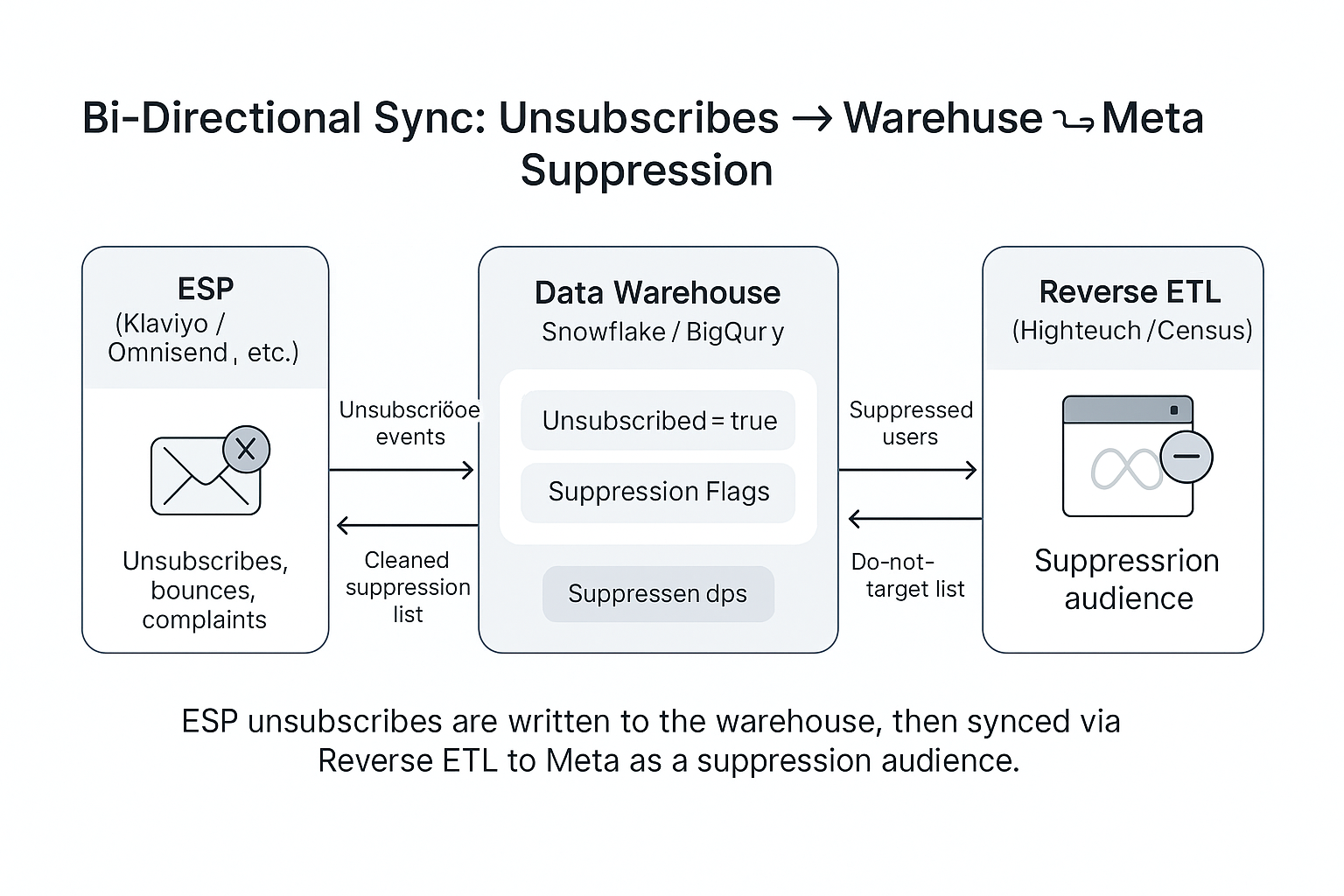
The play: Stop wasting ad dollars on dormant or unsubscribed users.
- Mechanism: Export ESP unsubscribes → Warehouse
- Reverse ETL: Hightouch to Google Ads / Meta Custom Audiences
- Pattern: Set up bi-directional sync every 24–48 hours
- Outcome: Tighter targeting, reduced CAC, improved audience hygiene
10. The Reverse ETL Tool Landscape (2025 Snapshot)
Hightouch:
- Integrates with: Klaviyo, HubSpot, Customer.io
- Strength: UX, marketer-friendly, fast setup
- Limitation: Less control over SQL/joins
Census:
- Integrates with: Omnisend, Iterable, Salesforce
- Strength: Deep modeling, Looker integration
- Limitation: More technical, SQL-centric
RudderStack:
- Integrates with: Customer.io, Mailchimp, Braze
- Strength: Flexible, open-source
- Limitation: Requires infrastructure setup, more dev time
Polytomic:
- Integrates with: Klaviyo, HubSpot
- Strength: SMB-friendly, quick launch
- Limitation: Fewer connectors, simpler logic
11. How to Launch in 30 Days
Week 1:
- Identify 1–2 high-impact models (LTV, churn risk)
- Align marketing + data team on use case and trigger logic
Week 2:
- Connect reverse ETL tool to warehouse + ESP sandbox
- Map destination fields (e.g. predicted_next_sku, VIP_tier)
Week 3:
- Build test campaigns with dynamic content
- QA sync performance, validate edge cases
Week 4:
- Launch live flows
- Monitor impact (CTR, revenue per send, unsubscribe rate)
Optional:
- Set up nightly syncs
- Create Slack alerting for sync failures
- Document sync models for other teams to build on
12. Reverse ETL Is the New Segmentation Layer
Here’s the kicker:
You don’t need to rebuild your ESP stack. You just need to activate the data you already have.
Reverse ETL gives marketers access to clean, model-driven signals—directly inside tools like Klaviyo and Omnisend. That means:
- No more CSV uploads
- No more guessing who to suppress or retarget
- No more static segments from last month’s behavior
If your Klaviyo segments still rely on opens and clicks, it’s time to connect your warehouse.
Let’s help you ship your first reverse ETL use case in 30 days..