
This guide unpacks what changed when Segment deprecated its Classic Klaviyo destination and what that means for your data activation layer. Whether you're troubleshooting reverse ETL segmentation score issues or trying to improve your unified engagement score email strategy, the right architecture can help you avoid the usual pitfalls.
The Post-2024 Reality of Segment ↔ Klaviyo
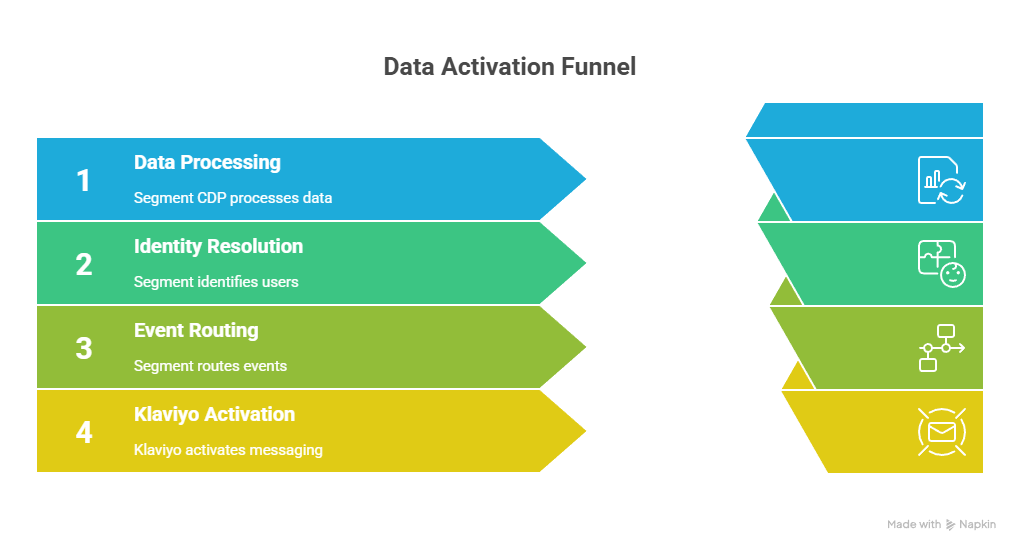
Post-deprecation, many teams noticed broken BigQuery helpdesk Klaviyo syncs and misfired unified engagement score email campaigns. This section sets the stage for what’s changed—and why understanding the Segment Klaviyo Actions Destination matters more than ever.
2024 was the year Segment Classic finally bit the dust.
Among the biggest casualties? The legacy Klaviyo destination, which quietly powered email event flows for thousands of brands. Once deprecated, it didn’t just break a few reports. It broke identity sync, event tracking, profile updates, and exposed brittle assumptions many teams didn't know they'd made.
If you’re one of the folks still untangling what happened between Segment Classic and the new Klaviyo Actions Destination, here’s the honest truth: it’s fixable. But the defaults won't save you.
Let’s walk through what broke, what still works, and how to make your Segment Klaviyo Actions destination future-proof.
What Exactly Was Deprecated in 2024?
Classic → Actions: The Forced Migration
Segment sunset the Classic Klaviyo destination. No backup. No rollback.
Teams had to migrate to the newer Klaviyo Actions Destination — a more structured, stricter approach to event delivery.
The gap?
- No built-in list subscriptions
- Stricter profile property mapping
- Dropped support for some implicit event types
This was the core of the klaviyo segment deprecation.
What Classic Allowed That Actions Does Not
Classic destinations were flexible, for better or worse.
- Auto-subscribed users to lists
- Created metrics on the fly
- Allowed loose property typing
- Mapped properties without strict validation
Actions removed all of that. Predictable? Yes. But not forgiving.
Why Segment Made the Change
Segment needed to standardize how data flowed to ESPs.
- Uniform schemas
- Consent-aware identity resolution
- Lower support burden
- Tighter error handling
Makes sense at scale. But for most teams, it broke workflows overnight.
What Broke for Teams After the Deprecations
1. Event Property Rejections & Silent Drops
Teams discovered entire Klaviyo events just… vanished. Why? Schema mismatches.
Klaviyo Actions Destination enforces strict typing. Any deviation? The event gets rejected quietly. Debugging is painful.
2. Rate Limit Bottlenecks
Another nasty surprise: Segment to ESP issues spiked under load.
Klaviyo's API limits weren't an issue in Classic. Now, every call counts. Bursty traffic? Say hello to dropped payloads.
3. Identity Resolution Drift
Classic relied on emails. Actions needs deterministic IDs.
Missing $email or anonymous ID mismatches caused profiles to fork, merge incorrectly, or not show up at all.
4. Missing List/Subscribe Logic
Legacy Klaviyo auto-added users to lists. Actions doesn't.
You now need to:
- Manually call the Klaviyo Lists API
- Or insert middleware to handle list logic
Most teams missed this.
5. Duplicate Profiles in Klaviyo
"Create or Update Profile" in Actions doesn't behave like Classic. It’s stricter, and will happily create duplicates if identity resolution isn’t tight.
What Works Well Now (The Good News)
1. More Stable Event Mapping
With Actions, once your schema is clean, it stays clean.
Strong typing makes event mapping way more predictable.
2. Better Profile Updates
No more all-or-nothing overwrites.
You can define which attributes append vs replace. Small win, big impact.
3. Granular Sync Controls
Only want specific events sent to Klaviyo? Now you can.
Less noise in Klaviyo dashboards. Fewer weird metrics.
4. Reliable Metric Creation
Once validated, Klaviyo accepts new events consistently. No guesswork.
5. Improved Deliverability Signals
Clean events → clean profiles → better segmentation.
Less risk of blasting outdated or wrong users.
How to Fix the Most Common Segment ↔ Klaviyo Issues
Fix #1 — Build a Clean, Documented Event Schema
Include these every time:
- $email
- $event_id
- Timestamps
Document each property. Validate weekly.
Fix #2 — Add a "Subscription Logic Layer"
Since Klaviyo Actions Destination doesn’t auto-subscribe, add one of:
- Segment Function
- Reverse ETL job
- Middleware handler
- Direct Klaviyo List API call
Fix #3 — Reduce Payload Size to Avoid Rate Limits
Don’t send the kitchen sink.
Strip out:
- Cart item arrays
- Full product reviews
- Redundant metadata
Keep it lean.
Fix #4 — Add Identity Resolution Enhancements
Use $email as your canonical identifier.
When possible, also pass $user_id for back-reference.
Fix #5 — Add Retry + Logging Logic
Use a Segment Function or middleware to catch drops before they hit Klaviyo.
Log all failures. Build dashboards.
Future-Proofing Your Segment → Klaviyo Setup
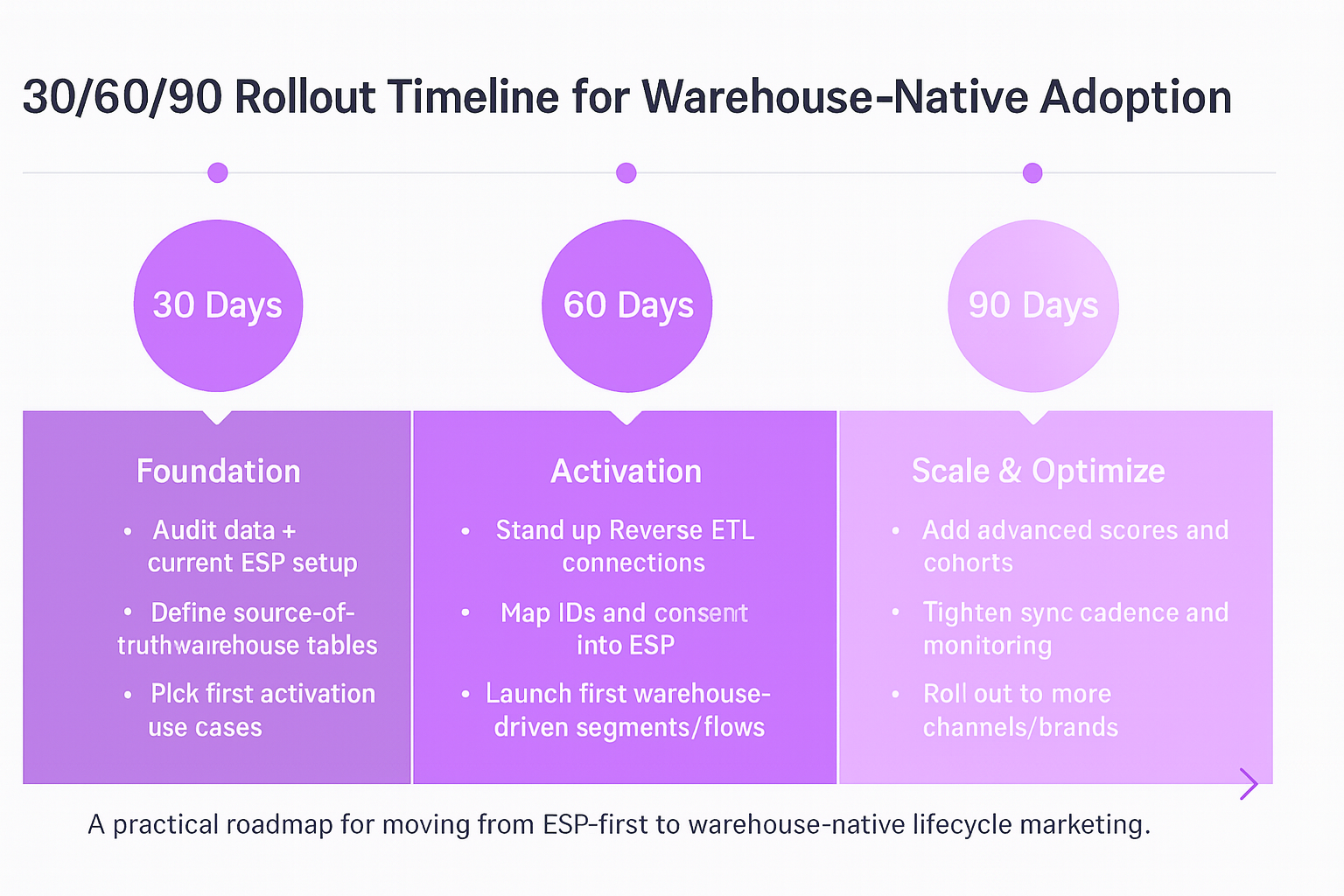
Strategy #1 — Avoid ESP as the First Point of Truth
Let your warehouse be the truth. Let Klaviyo activate.
You’ll have more control over the segment klaviyo actions destination flow.
Strategy #2 — Use Reverse ETL for Heavy Attributes
Push LTV, churn score, and customer flags from Snowflake/BigQuery.
Don’t overload Segment with non-realtime properties.
Strategy #3 — Build a "Destination Health" Dashboard
Track:
- Failed events
- API errors
- Schema mismatches
Review weekly. Add alerts.
Strategy #4 — Plan for Additional Deprecations
Segment is deprecating more legacy ESPs.
Don’t be caught off guard again.
When to Replace Segment → Klaviyo With a Hybrid Model
Use Segment for Events, Reverse ETL for Profile Data
This is the sweet spot for modern data stacks.
Use Warehouse + Functions When You Need Deterministic Identity
Essential for:
- Multi-brand orgs
- Shopify + non-Shopify blends
Use Middleware When You Need Deduping or Consent Logic
Custom consent logic? Unsub flows? Stitching cross-device IDs?
You’ll need a middleware layer.
Example Architecture (2025-Ready)
- Flow A — Segment Events → Klaviyo Metrics
- Flow B — Reverse ETL → Klaviyo Profile Properties
- Flow C — Function/Middleware → List Subscription API
Final Recommendations & Checklist
- Document your full event schema
- Validate every Klaviyo property mapping
- Add subscription logic (via Function or API)
- Test throughput under real traffic
- Set rate-limit alerts
- Build a fallback + logging layer
If You’re Still Stuck
If your Segment → Klaviyo setup broke after the 2024 deprecations, we can help rebuild a stable, future-proof pipeline.