
Switching email platforms isn’t just about copying flows or importing contacts. It’s about protecting your sender reputation. If you don’t migrate deliverability correctly, expect a slump—fewer opens, more spam, and inboxing issues you can’t diagnose.
This post gives you the full breakdown: a deliverability migration checklist, suppression sync esp mapping, and segment parity tracking so you don’t lose trust with inbox providers.
Why Deliverability Drops After an ESP Migration
A familiar story: you switch to a shiny new ESP, rebuild your flows, hit send—and your open rates tank.
The issue? It’s rarely the platform. It’s almost always suppression mismatches, missing warmup logic, and segment parity errors. Most brands think migration means list imports and email rebuilds. In truth, a proper migration means reestablishing your sender credibility from the ground up.
This guide walks you through the exact steps—from audit to infrastructure—to keep inboxing strong.
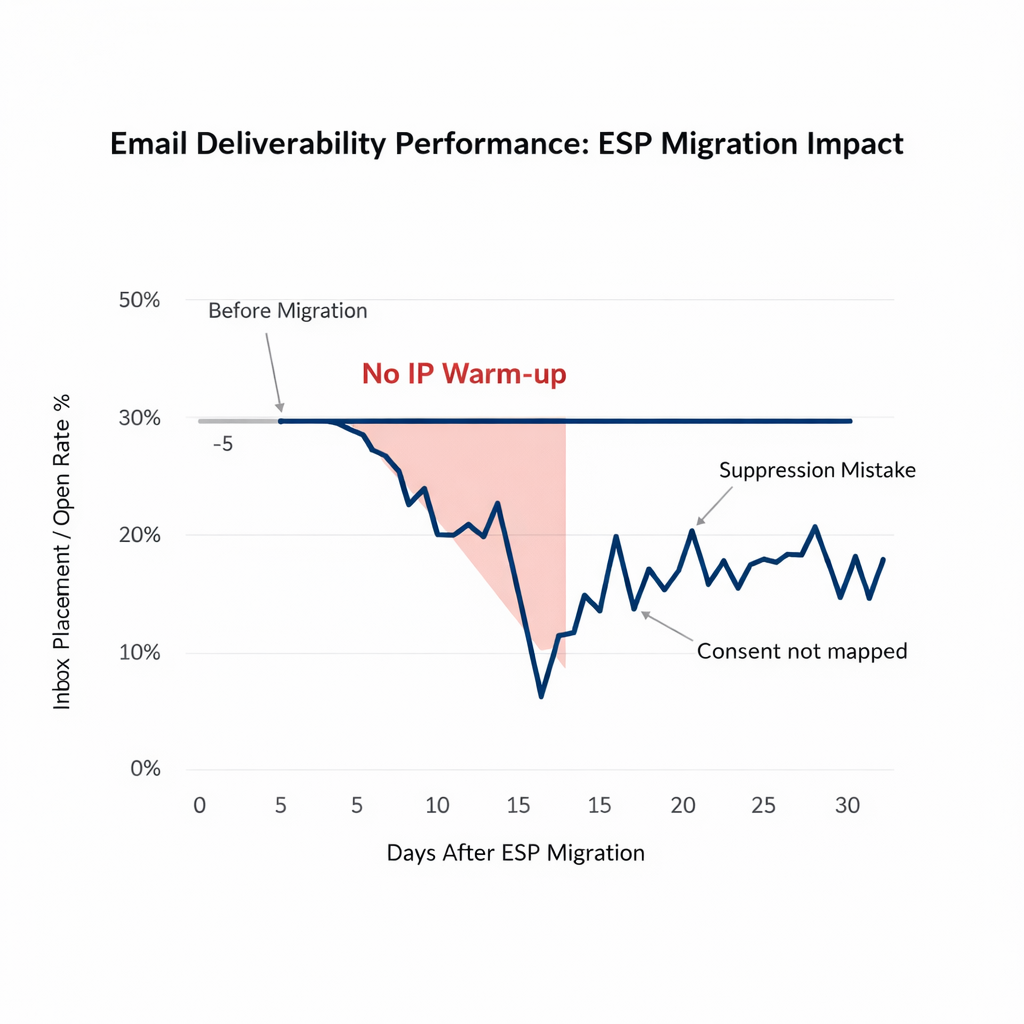
The 5 Causes of Deliverability Slumps After Switching ESPs
1. No Proper Warmup Schedule
A new IP or domain has zero sending reputation. Even if you’re using a shared pool, mailbox providers track sender-level behavior.
Sending too fast, too soon? You’ll trigger throttling or spam placement.
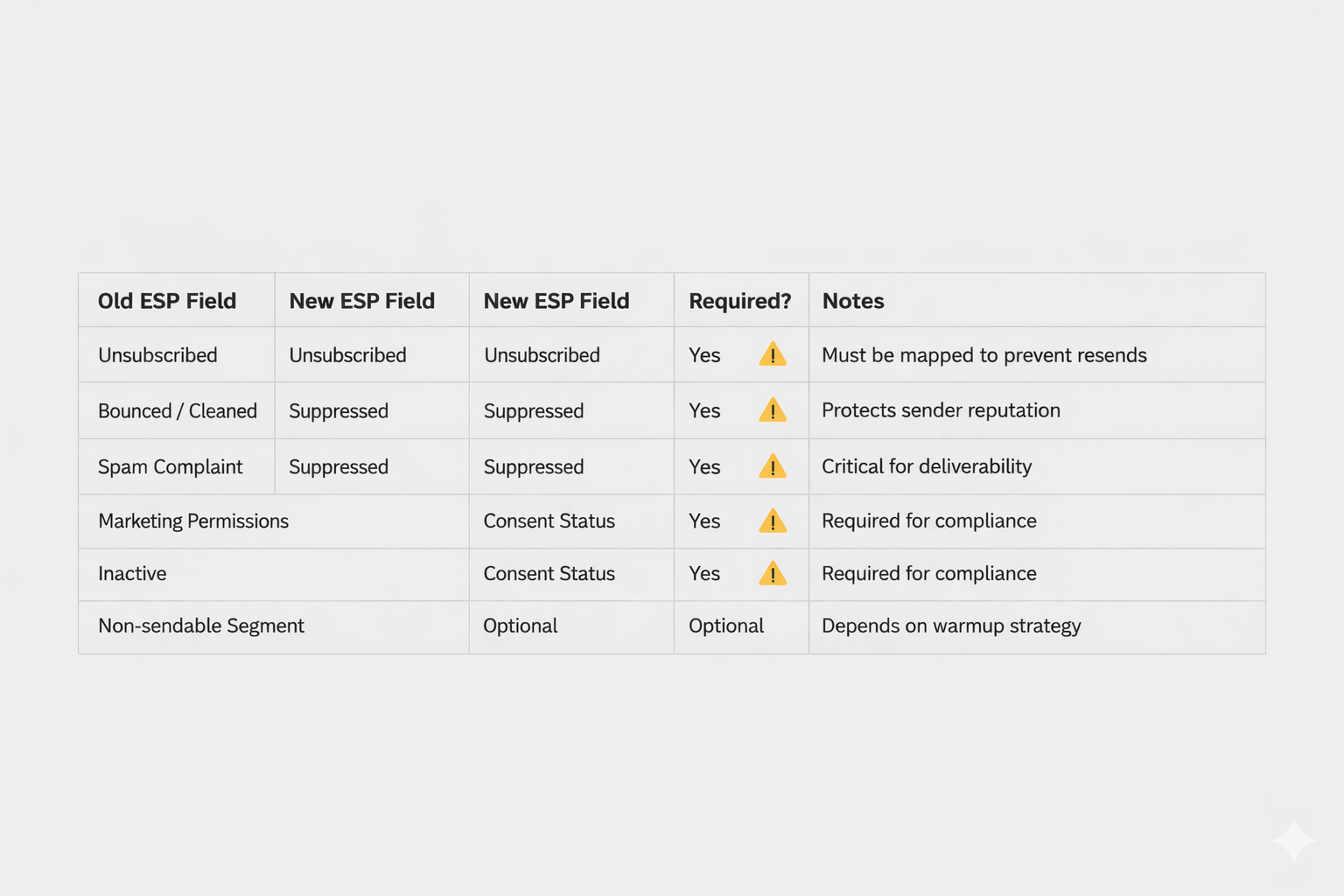
2. Suppression Sync ESP Mismatch
One ESP’s “unsubscribed” could be another’s “inactive.” Without mapping:
- Bounces get reactivated
- Complainers get sent again
- You poison your new IP
Suppression sync esp mismatches are one of the fastest ways to lose reputation.
3. Segment Parity Gaps
Segment sizes don’t always match when you migrate. Why?
- Profiles missing consent
- Different default filters
- Suppressed contacts accidentally re-included
If your biggest Klaviyo segment goes from 120k to 78k post-migration, something broke.
4. Consent State & Compliance Drift
Consent isn’t universal. Each ESP stores it differently:
- Mailchimp: “Marketing Permissions”
- Klaviyo: Profile-level consent per channel
- Customer.io: Boolean unsubscribes per channel
If you don’t translate this clearly, you risk silently losing send eligibility.
5. Legacy Suppressed Profiles Re-Activated
CSV imports are dangerous.
If you bulk import without mapping unsubscribed or bounced, those suppressed profiles get reactivated—and mailbox providers notice fast.
The Deliverability Migration Checklist: What Must Happen Before You Send Anything
This section delivers your literal deliverability migration checklist—no guessing required.
1. Audit Current ESP Before Migration
Start here:
- Count total subscribers
- Count suppressed profiles
- Export: unengaged, bounced, complained
- Document segment parity and expected audience sizes
2. Build a Suppression Sync ESP Map visual table
3. Create Segment Parity Docs
Define for every segment:
- Name + source rules
- Expected count
- Expected sendable + non-sendable profiles
This becomes your validation report after go-live.
4. Warmup Plan (14–21 Days)
Break down your list by recency of engagement:
- Tier 1: Last 30 days
- Tier 2: 31–90 days
- Tier 3: 91–120 days
Send volume:
- Days 1–3 → 5–10k/day
- Days 4–7 → 10–25k/day
- Days 8–14 → increase to full Tier 1
Focus only on high-engagement content. No promos.
5. Configure Sending Infrastructure
Missing any of these? You’re already losing deliverability:
- SPF
- DKIM
- DMARC (set to none at first)
- Custom CNAMEs for tracking
- Branded sending domains
Migrating Segments, Profiles & Consent the Right Way
Step 1 — Pull the “Clean” Audience Only
Remove:
- Profiles inactive >180 days
- Anyone with a bounce history
- Anyone who unsubscribed
Step 2 — Match Consent Exactly
Consent mapping must include:
- Email marketing allowed (Yes/No)
- SMS consent if applicable
- Regional compliance metadata
Step 3 — Validate Segment Parity
Post-migration:
- Compare profile totals
- Compare segment sendable counts
- Spot-check for missing flow eligibility
If parity is off by more than 10%, don’t launch.
How to Test Deliverability During the First 30 Days
1. Inbox Placement Testing
Seed your sends to Gmail, Yahoo, Outlook inboxes.
Check daily:
- Inbox vs promotions vs spam folder
- Image rendering and link behavior
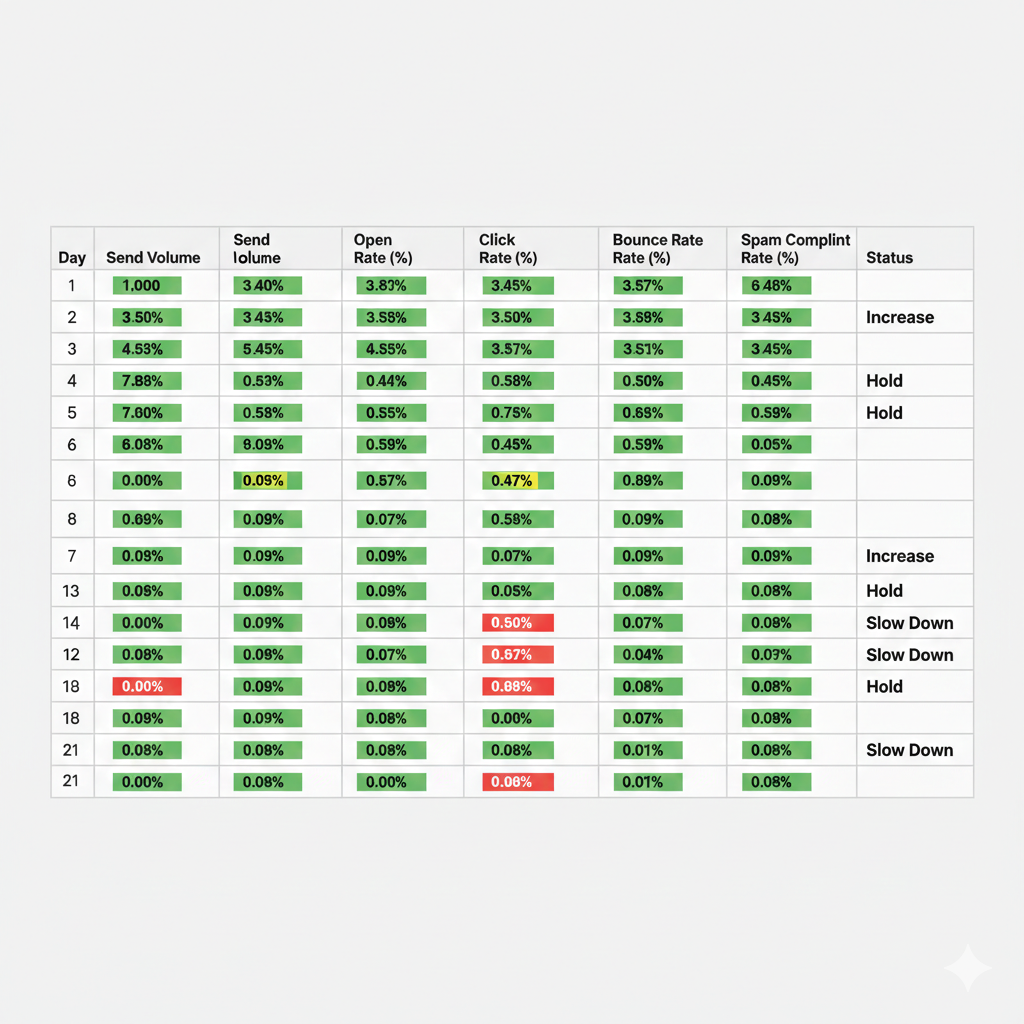
2. Daily Metric Benchmarks
Track these:
- Open Rate trend (OR)
- Click-to-open rate (CTOR)
- Soft/hard bounce rates
- Spam complaint rate (<0.08% max)
3. Adjust Volume Dynamically
- OR drop >10%? → Slow down
- Soft bounces spike? → Clean segments
- Spam complaints? → Remove Tier 3 audience
Platform-Specific Notes: Klaviyo, Mailchimp, Customer.io, Omnisend
Klaviyo
- Suppression ≠ Unsubscribe
- Consent state matters more than list membership
- Segment issues happen when external sources are connected
Mailchimp
- Must manually export “cleaned” users
- Groups and Tags don’t map 1:1
- Strict double opt-in import policies
Related: Klaviyo ↔ Mailchimp Migration: Gotchas That Blow Up Timelines (and How to Avoid Them)
Customer.io
- Channel-based unsubscribes (email, push, SMS)
- Event triggers can overwhelm if flows launch too early
Omnisend
- Aggressive throttling for new senders
- Must sync ecommerce flags: abandoned_cart, order_created, etc.
A Simple Deliverability Migration Template (Copy/Paste)
Data Prep
- Export lists + suppression flags
- Map fields clearly
- Remove all invalid contacts
Migration Setup
- Set up DNS + sending domain
- Import contacts in stages
- Suppress manually or via API
- Rebuild segments
- Load flows as drafts
Warmup Sequence (Days 1–21)
- Start small
- Prioritize engagement over scale
- Adjust daily based on inbox placement + metrics
Final Checklist — Zero-Risk ESP Migration
- ✔ Suppression sync completed
- ✔ Segment parity validated
- ✔ Consent mapped properly
- ✔ Warmup plan approved
- ✔ DKIM/SPF/DMARC configured
- ✔ Tiered sending audiences created
- ✔ First 3 campaigns ready for launch
Conclusion — Your Deliverability Lives or Dies on Migration Day
You can rebuild flows. You can re-import lists. But you can’t rebuild trust with Gmail if you burn your reputation.
ESP migrations aren’t technical exercises. They’re deliverability operations. Nail suppression sync esp logic. Document segment parity. Follow the deliverability migration checklist—and keep your engagement steady.
Want a deliverability-safe ESP migration?
Wired Messenger migrates without the slump.