
Patient lifetime value in telehealth is the number that ties marketing to the business, yet it rarely shows up in an email report. Ask a GLP-1 founder about marketing performance and you'll hear about acquisition: cost per lead, cost per patient, conversion rate. Ask about email, and the conversation drops to open rates.
Neither tells you what a patient is actually worth.
Lifetime value reflects how long patients stay, how much they spend while they're with you, and what it costs to serve them. It's what CFOs model, what investors scrutinize, and where lifecycle marketing does its most important work.
Opens and clicks don't answer the question your board is asking
Email reporting tends to stop at engagement. Open rates, click rates, and perhaps a revenue attribution figure from the ESP that nobody fully trusts.
Those numbers aren't useless. They're just a level removed from what the business cares about. A board doesn't ask whether the day-14 email had a strong open rate. It asks why average patient tenure is four months instead of seven, and what it would take to change that.
That's the gap between how most telehealth programs measure lifecycle marketing and how the business measures success. Closing it changes how email gets funded, staffed, and judged.
If you've read our guide to email lifecycle marketing for telehealth, you know the lifecycle is built around the patient journey. Measuring it in lifetime value is the natural next step, and the one that earns it a seat in executive conversations.
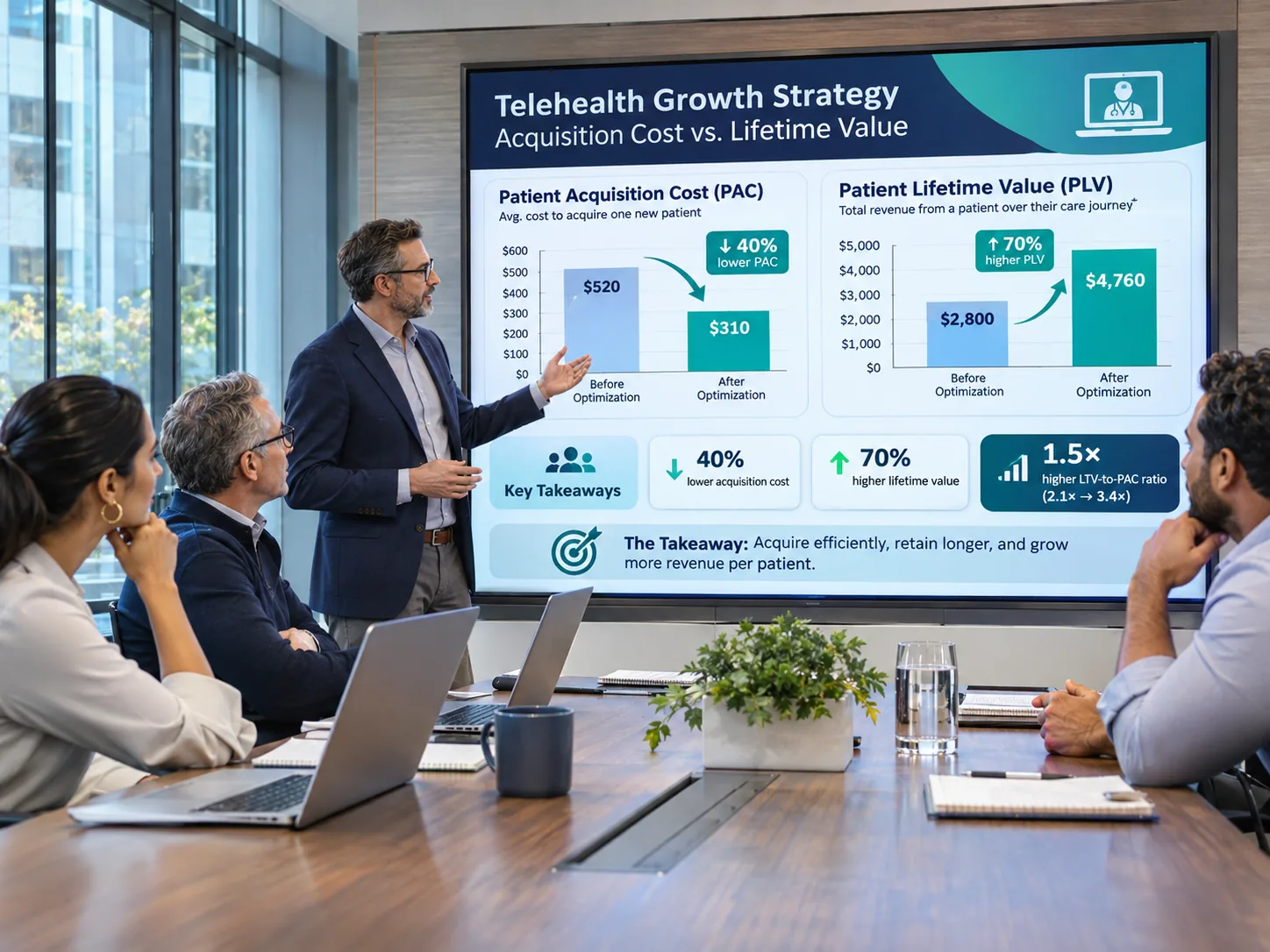
The levers that move patient lifetime value in telehealth
At its simplest, lifetime value comes down to a few inputs: what a patient pays each month, the margin on that revenue, and how many months they stay. Lifecycle marketing touches every one of them.
Tenure
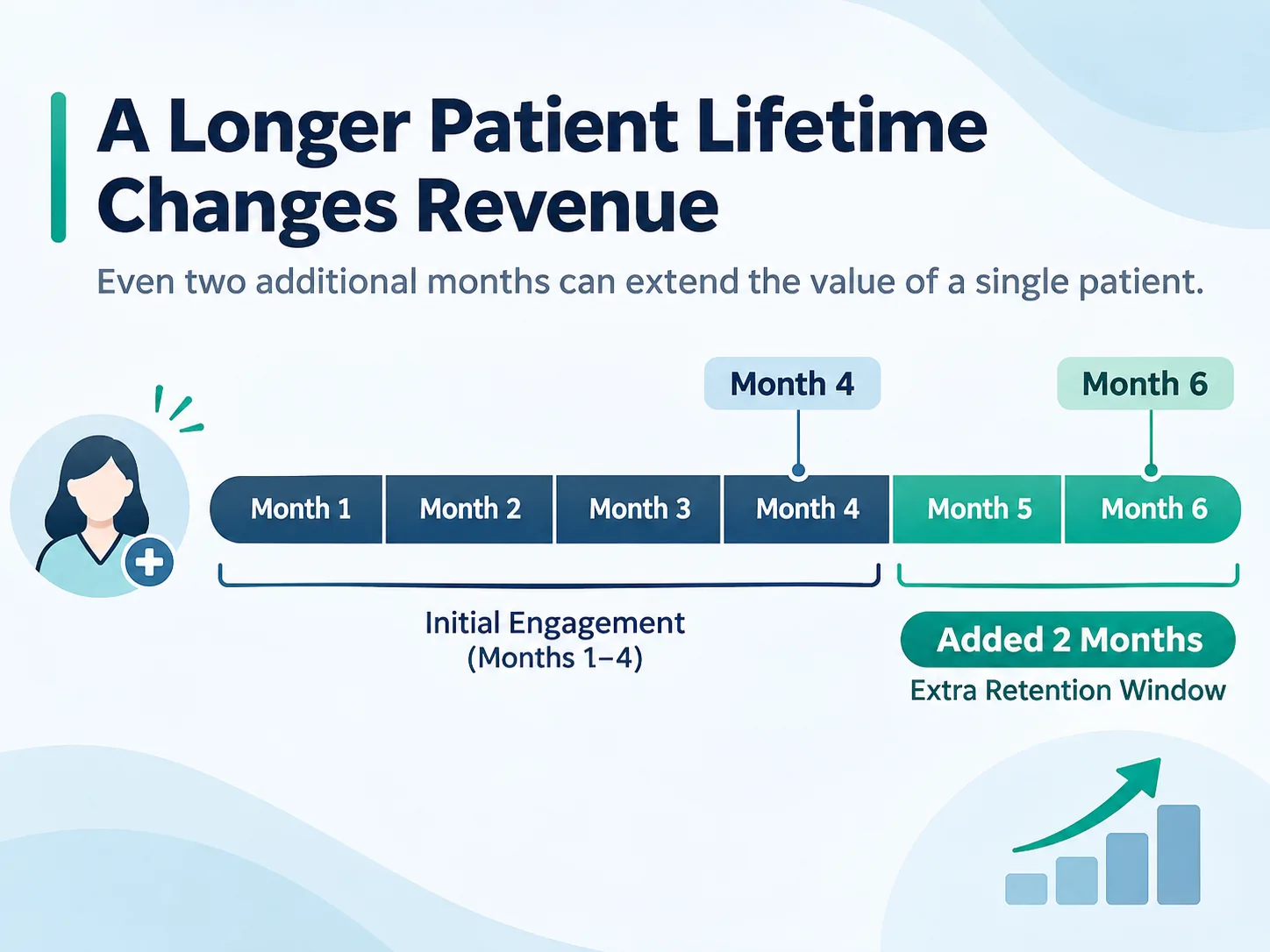
In GLP-1 telehealth, this is the biggest lever by far. Take a hypothetical patient paying $300 a month who stays an average of four months, roughly $1,200 in revenue. Stretch that average to six months and the same patient is worth $1,800: a 50% lift with no change in acquisition spend. Onboarding, side-effect support, plateau messaging, and refill timing all feed this number directly.
Revenue per patient
Plan upgrades, add-on services, and maintenance offerings raise what each patient spends over time. Handled with care, they deepen the relationship rather than squeezing it. We look at that opportunity in maintenance-phase programs.
Recovered patients
Every lapsed patient who returns adds months back to the average, with no new acquisition cost attached. It's LTV growth most financial models never account for.
Cost to serve
Clear, well-timed communication cuts support tickets, failed payments, and avoidable refund requests. Each carries an operational cost that quietly erodes margin.
None of these levers moves on its own. They move because someone designed the lifecycle to move them, and kept tuning it as the business changed.
Where email automation earns its place in the model
Once LTV becomes the scorecard, email automation looks different. It stops being a list of campaigns and starts working as infrastructure for retention, expansion, and recovery.
That shift raises the bar. Automations need to be triggered by patient data rather than send dates, which depends on integration with EHR, pharmacy, and billing systems. Reporting needs to connect lifecycle activity to tenure and revenue, not just engagement. And every flow has to hold up under HIPAA.
Measurement is where most programs fall short. Without cohort-level views of retention and revenue, it's nearly impossible to tell which parts of the lifecycle are pulling their weight. We break down the numbers that deserve a place in the report in lifecycle metrics that matter.
This is the work that turns email from a cost center into a line item a CFO can defend. It takes a team that speaks both marketing and finance fluently.
Lifecycle marketing belongs in the unit economics conversation
Acquisition gets patients in the door. Lifetime value decides whether the business works.
For GLP-1 programs facing rising acquisition costs and a crowded market, patient lifetime value in telehealth is where the margin lives. Lifecycle marketing is one of the few levers that can move it without spending more to find new patients.
If your email program is still reported in opens and clicks, it may be time to measure it the way the rest of the business does. Wired Messenger's email automation and integration services are built to tie lifecycle work directly to the numbers your leadership team cares about.